
Why this book is most valuable in 2026 for data science
A book for data scientists who want to understand, not just apply

Pattern Recognition and Machine Learning
by Christopher M. Bishop
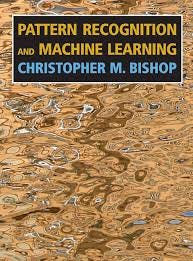
Some books teach you how to use tools.
This book teaches you how to think.
Pattern Recognition and Machine Learning is not an easy book, and it was never meant to be. It does not promise shortcuts, quick wins, or train a model in five minutes solutions. What it offers instead is something far more valuable. A deep, structured way of understanding machine learning from first principles.
This is not a book you rush through. It is a book you return to again and again, each time with a little more mathematical maturity and a little more curiosity.
A statistics book at heart
At its core, PRML is a probabilistic statistics book wearing a machine learning jacket.
Almost everything in the book is framed in terms of probability distributions, likelihoods, priors, posteriors, and uncertainty. Models are not treated as magical prediction machines, but as explicit assumptions about how data is generated.
Instead of asking
Which algorithm performs best?
The book gently pushes you to ask
What assumptions am I making about the data?
What kind of uncertainty does this model ignore?
What does this probability actually mean?
This Bayesian framing is one of the book’s greatest strengths. Linear regression, logistic regression, neural networks, mixture models, and kernel methods all live inside the same probabilistic worldview. Once that clicks, machine learning stops feeling like a collection of tricks and starts feeling like a coherent system.
Why this book stands out
What makes PRML special is not just the math. It is the consistency of thought.
Different models do not feel disconnected. Instead, they feel like variations on a small number of powerful ideas. Bias variance tradeoff, regularization, overfitting, and latent variables are not buzzwords here. They emerge naturally from the mathematics.
Bishop also does something rare. He trusts the reader.
He does not oversimplify to make the material feel friendly. He assumes you are willing to sit with discomfort, reread a paragraph, or derive an equation twice. In return, he gives you clarity that lasts far longer than any tutorial.
Why this book is a gem in 2026
In 2026, almost anyone can build a model.
With modern libraries, a few lines of code can train a neural network, tune hyperparameters, and produce impressive looking results. Accuracy is easy to get. Confidence is easy to fake.
Understanding is not.
Very few people truly know what their models are doing, what assumptions they rely on, or when they will quietly fail. As machine learning becomes easier to use, real understanding becomes rarer and more valuable.
That is exactly why PRML matters more now than ever.
This book does not help you build models faster.
It helps you understand them deeply.
And in a world full of black boxes, that depth still matters.
An honest warning
Let us be honest. This book is hard.
You will not casually read it before bed.
You will pause often.
Some equations will feel intimidating.
Progress will be slow.
But that is not a flaw. It is the point.
PRML is not meant to be finished. It is meant to sit on your desk for years. Many people do not read it cover to cover. They grow into it. Each revisit reveals something new.
Who should read this book?
This book is for you if you want to understand machine learning rather than just apply it.
It is especially valuable if you come from statistics, mathematics, physics, or engineering. If you care about uncertainty, assumptions, and foundations, this book will reward you.
If you are looking for quick tutorials or production recipes, this is not the right place. But if you want depth that compounds over time, few books come close.
Pattern Recognition and Machine Learning is demanding, timeless, and deeply rewarding.
It does not chase trends.
It does not oversell itself.
It quietly teaches you how to think.
Years later, many modern machine learning ideas still feel like footnotes to this book. And in 2026, when everyone can train a model, that way of thinking matters more than ever.
This is not just a classic.
It is a reminder that understanding still matters.
And the best part is that this book is free.
You can get the pdf of the book here.
If you made it this far and you are not following me yet, this is a good moment to do it.
You can find me on: YouTube | Instagram | TikTok
You can find me on YouTube and Instagram, where I share free resources, tips, and opportunities. If you enjoy this kind of content, you can also subscribe to the newsletter to stay updated.
If you would like to support my work, you can buy me a coffee on Ko-fi . Even clapping for this article or sharing it with someone helps more than you might think.
I will be posting more content soon on scholarships, fellowships, and data science.
Thank you for reading. I will see you next time.